Colombia Earthquake: Children Face Growing Risk of Trafficking as Communities Struggle to Recover
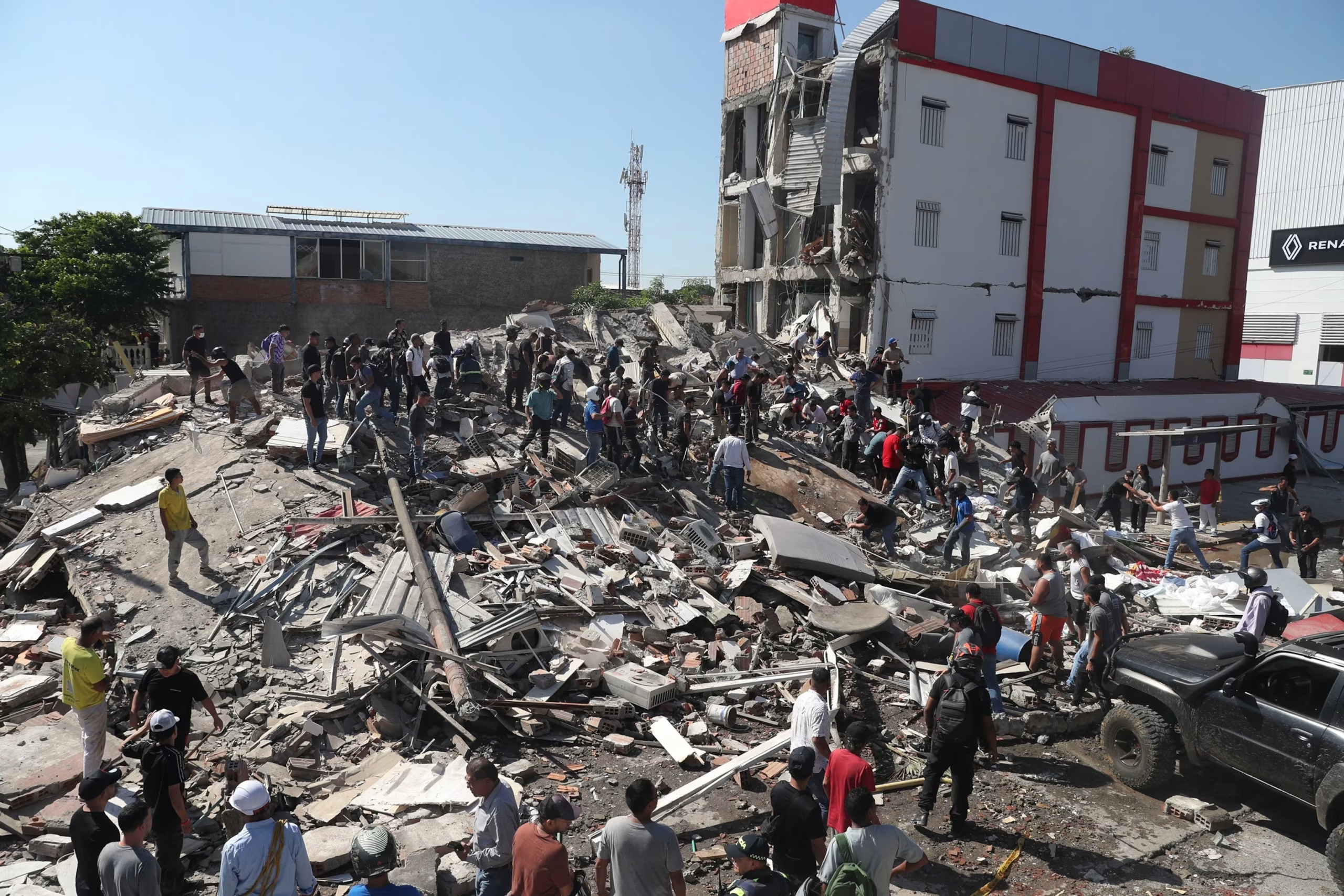
Colombia is facing a humanitarian crisis after a devastating earthquake struck on August 10, 2026, leaving thousands of families in urgent need of assistance. Beyond collapsed buildings, injuries, and loss of life, humanitarian organizations are warning of another serious danger: vulnerable children could face increased exposure to human trafficking and criminal exploitation.
According to Vatican News, the earthquake has affected approximately 53,000 people, injured around 4,000, and left nearly 300 people dead. The impact has been particularly severe in isolated rural communities, where families already experiencing poverty and displacement have lost homes, possessions, and access to essential services.
The disaster has created an emergency that extends far beyond the immediate physical destruction. As families struggle to survive and communities attempt to rebuild, humanitarian workers are emphasizing the urgent need to protect children and other vulnerable people from exploitation.
Colombia Earthquake Leaves Vulnerable Families in Crisis
The earthquake has hit some of Colombia’s most vulnerable communities particularly hard.
Among the areas facing serious challenges are Chocó and Buenaventura, regions already affected by extreme poverty and displacement linked to Colombia’s long history of internal conflict.
Stefano Piziali, director general of the humanitarian organization Cesvi, told Vatican News that emergency workers have reached some remote villages affected by the disaster.
Piziali explained that the earthquake struck isolated rural areas particularly severely, leaving entire families without homes and possessions. For communities that were already struggling, another major crisis can make recovery even more difficult.
Humanitarian organizations are therefore working not only to provide immediate relief but also to help communities regain stability and rebuild their livelihoods.
According to Vatican News, Cesvi is working to establish protection centers where survivors can access water, sanitation services, and psychosocial support.
Children Face Increased Risk of Human Trafficking
One of the most concerning consequences of a major disaster is the disruption of family and community structures.
Children who become separated from their parents or trusted adults can become particularly vulnerable to people seeking to exploit the chaos.
Piziali warned that child trafficking is already a serious problem in Latin America and that the disruption caused by a natural disaster can increase the risks.
When families lose their homes, livelihoods, and support networks, children can become easier targets for criminal networks and armed groups.
This is why disaster response must go beyond food, water, shelter, and medical care.
Children also need protection.
They need safe spaces.
They need trusted adults.
They need psychosocial support.
And they need people trained to recognize the warning signs of exploitation and trafficking.
Protecting Children Must Be Part of Disaster Response
Humanitarian workers emphasize that children affected by disasters require specialized support.
Piziali stressed the importance of having trained personnel who know how to communicate with children, gain their trust, encourage them to speak about their experiences, and help them understand that they are in a safe environment.
This is particularly important because children may not always know how to describe what has happened to them or recognize when someone is attempting to exploit them.
A safe environment can provide more than immediate protection. It can give children a sense of stability at a time when nearly everything familiar may have disappeared.
For families already experiencing poverty, displacement, or social instability, this protection becomes even more important.
Indigenous Communities Also Face Serious Challenges
The earthquake has also raised concerns about indigenous communities living in affected areas.
According to Vatican News, humanitarian workers fear that the disaster could further weaken indigenous communities that already face significant social and economic pressures.
Piziali warned that one of the greatest risks is that the trauma caused by the earthquake could further fracture indigenous communities.
For indigenous families, recovery therefore involves more than rebuilding houses.
It also means protecting community identity, family structures, livelihoods, culture, and social bonds.
A successful recovery must listen to affected communities and respect their particular needs rather than applying a one-size-fits-all approach.
The Psychological Impact of the Earthquake
Natural disasters leave emotional wounds that may remain long after damaged buildings have been repaired.
People who lose family members, homes, livelihoods, or their sense of security can experience fear, grief, anxiety, and trauma.
Children can be especially affected.
That is why psychosocial support is an important part of humanitarian response.
Cesvi’s planned protection centers are intended to provide survivors with services that include psychosocial assistance alongside basic needs such as water and sanitation.
Supporting mental and emotional recovery can help families regain confidence and begin rebuilding their lives.
Recovery Will Take More Than Emergency Aid
The immediate response to a disaster focuses on saving lives and meeting basic needs.
But recovery does not end when emergency shelters are established.
Families eventually need to return to work, businesses need to reopen, local markets need to function, and communities need opportunities to become self-sufficient again.
Cesvi hopes that as conditions stabilize, local markets will resume operating and economic assistance programs will help families rebuild their livelihoods.
This approach is important because humanitarian assistance should not only help people survive a crisis—it should also help them regain the ability to provide for themselves.
Piziali said Cesvi intends to accompany affected communities throughout their recovery, with particular attention to environmental concerns and the protection of indigenous communities.
A Call to Protect Human Dignity
The situation in Colombia reminds us that humanitarian crises often create secondary dangers that are not immediately visible.
After an earthquake, the world naturally focuses on collapsed buildings, casualties, injuries, and destroyed infrastructure.
But behind those statistics are families trying to find one another, children trying to understand what happened, parents struggling to protect their loved ones, and communities attempting to rebuild their lives.
Protecting human life means protecting the most vulnerable.
Children who have lost their homes or become separated from their families should never become victims of exploitation.
They deserve safety, dignity, compassion, and the opportunity to recover.
A Catholic Response: Pray for Colombia
For Catholics around the world, the crisis in Colombia is also a call to prayer and solidarity.
The Church continually reminds us of the dignity of every human person, especially those who are poor, displaced, suffering, or vulnerable.
The Catechism of the Catholic Church teaches the importance of respect for human dignity and care for our neighbors, particularly those in need.
As Colombia begins the difficult journey of recovery, we can pray for those who have lost loved ones, homes, livelihoods, and security.
We can pray especially for children who may be vulnerable to trafficking and exploitation.
We can pray for humanitarian workers who are entering difficult and isolated areas.
And we can pray for the strength and wisdom of communities rebuilding after the disaster.
For more Catholic prayers and messages of hope during difficult times, visit Catholic Daily Hope.
A Prayer for the People of Colombia
Merciful Lord,
We place before You the people of Colombia who are suffering following this devastating earthquake.
Comfort those who have lost loved ones.
Heal those who have been injured.
Provide shelter for families who have lost their homes.
Give strength to those who have lost everything.
Lord, protect every child affected by this disaster.
Keep vulnerable children safe from traffickers, criminal networks, armed groups, and anyone who would take advantage of their suffering.
Watch over children who have been separated from their families and guide them safely back to those who love them.
Bless humanitarian workers, emergency responders, medical teams, priests, religious communities, volunteers, and everyone working to bring relief to affected communities.
Strengthen indigenous communities and protect their dignity, culture, and social bonds.
Give wisdom to those coordinating the recovery and provide the resources necessary to rebuild homes, livelihoods, and communities.
May those who are suffering find people willing to stand beside them.
May those who have lost hope discover courage to begin again.
And may the people of Colombia experience Your protection, mercy, and peace.
Our Lady, Queen of Peace, pray for Colombia.
Amen.
Hope Beyond the Disaster
The road to recovery will not be easy.
Families will need continued assistance. Communities will need to rebuild. Children will need protection and emotional support. Local economies will need to recover.
But humanitarian workers are committed to accompanying affected communities beyond the immediate emergency.
The earthquake may have destroyed homes and disrupted lives, but it does not have to destroy the hope of the people.
With continued humanitarian assistance, community support, protection for vulnerable children, and opportunities for families to rebuild their livelihoods, Colombia can begin the long journey toward recovery.
In moments of disaster, compassion becomes a lifeline.
And protecting those who are most vulnerable is not simply an emergency responsibility—it is a shared human responsibility.
Read More
- Catholic Daily Hope — Catholic prayers, reflections, Bible messages, and inspirational stories of faith and hope.
- Vatican News: Colombia earthquake and trafficking concerns — Read the original report and humanitarian concerns surrounding vulnerable children.
- Catechism of the Catholic Church — Explore Catholic teaching on human dignity, charity, and care for those in need.