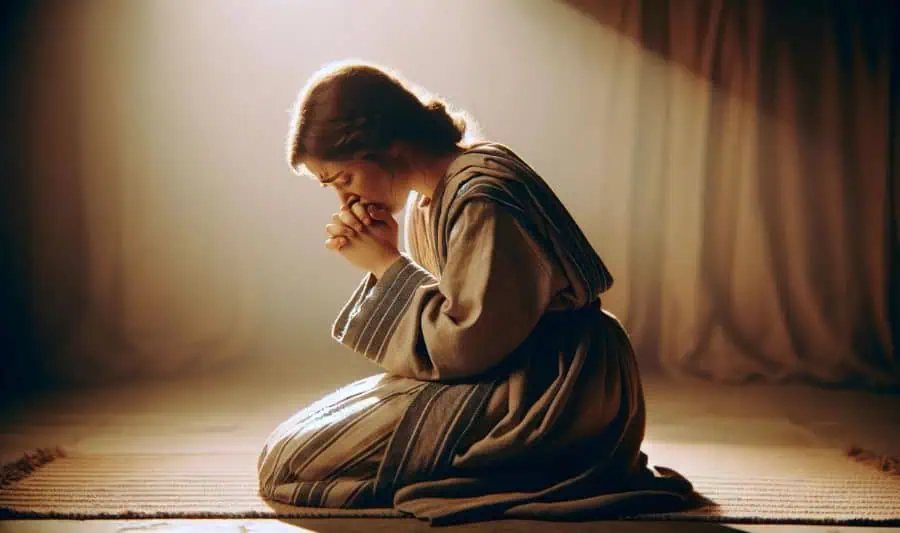
Hannah in the Bible: The Woman Who Waited for a Child and Never Stopped Praying
There are some prayers that are easy to pray because we know the answer will not cost us much. Then there are prayers that come from the deepest place of the heart—prayers whispered through tears, prayers repeated year after year, prayers that seem to remain unanswered.
The story of Hannah in the Bible is one of those stories.
Hannah was a woman who deeply desired a child. She lived with the pain of being childless for years, while watching another woman have children. Her situation brought her sorrow, humiliation, and emotional pain. Yet Hannah did something that makes her story one of the most powerful examples of persistent faith in Scripture:
She continued taking her pain to God.
Her story, found in 1 Samuel 1–2, is not simply about a woman who eventually became a mother. It is about a woman who learned to pour out her heart before God, trust Him with her deepest desire, and remain faithful through a long season of waiting.
If you enjoy Catholic reflections, Scripture stories, prayers, and messages of hope, you can also visit Catholic Daily Hope for more faith-based encouragement.
Hannah’s Pain Was Real
Hannah was married to a man named Elkanah. He loved her deeply, but Hannah had no children.
The Bible tells us that Elkanah’s other wife, Peninnah, had children. This created a painful situation for Hannah because Peninnah repeatedly provoked and humiliated her because she was childless.
This was not a one-time experience.
It happened year after year.
Whenever the family went to worship at Shiloh, Hannah experienced the same emotional pain. She would weep and lose her appetite. Her sorrow became so deep that even her husband noticed her suffering.
Imagine carrying the same unanswered prayer year after year.
Imagine watching other women receive what you have been asking God for.
Imagine attending celebrations for other people’s children while quietly wondering when your own prayer will be answered.
For Hannah, this was not simply about wanting something. It had become a deep emotional burden.
And perhaps this is why her story remains so powerful today.
There are people who are carrying similar silent pain.
Some women have waited years to become mothers. Others have experienced infertility, miscarriage, or other painful circumstances surrounding motherhood. Some have been subjected to insensitive questions from family members, friends, or strangers.
Sometimes people see only what is visible.
They do not see the tears.
They do not hear the prayers.
They do not know how many nights someone has cried before falling asleep.
Hannah’s story reminds us that God sees what other people cannot see.
Hannah Took Her Pain to God
Instead of allowing her pain to completely destroy her faith, Hannah went before the Lord.
The Bible says:
“In her bitterness she prayed to the LORD, weeping freely.” — 1 Samuel 1:10
This is one of the most beautiful aspects of Hannah’s story.
She did not pretend that everything was fine.
She did not hide her pain from God.
She did not offer a polished prayer simply to sound religious.
She poured out her heart.
Hannah’s prayer was honest.
She was hurting, and she told God.
She was longing for a child, and she told God.
She felt forgotten, and she brought that feeling before God.
Her prayer shows us that we do not need perfect words when we come before the Lord.
Sometimes the most powerful prayer is simply:
“Lord, I am hurting. Please remember me.”
Hannah’s prayer was so intense that Eli the priest initially misunderstood her and thought she was drunk. But Hannah explained that she was not drunk; she was a woman carrying deep sorrow and pouring out her heart before God.
What a beautiful description of prayer.
Prayer is not always sitting quietly with perfect words.
Sometimes prayer is crying before God because you have nowhere else to take your pain.
“Do Not Forget Your Servant”
Hannah made a solemn promise to God.
She asked the Lord to look upon her hardship and remember her. If God gave her a son, she promised to dedicate him to the Lord all the days of his life.
Her prayer was not simply:
“God, give me what I want.”
There was something deeper.
Hannah wanted God’s blessing, but she was also prepared to give back what God entrusted to her.
This becomes important later in her story.
After praying, Hannah received words from Eli:
“Go in peace, and may the God of Israel grant you what you have requested.”
Something remarkable happened after this.
The Bible says Hannah left, ate and drank with her husband, and no longer appeared downcast.
Her circumstances had not yet changed.
She was not pregnant yet.
She did not have a child in her arms.
But something inside her had changed.
She had placed her burden into God’s hands.
That is an important lesson about faith.
Sometimes God changes our circumstances immediately.
Sometimes He changes our hearts first.
The Answer Came After the Waiting
Eventually, Hannah conceived and gave birth to a son.
She named him Samuel, because she had asked the Lord for him.
The child she had prayed for was finally in her arms.
After years of waiting, the prayer that had once been accompanied by tears had become a testimony.
Hannah could now say:
God heard me.
But the story does not end with Hannah receiving her blessing.
And this is where her faith becomes even more remarkable.
She remembered her promise.
Once Samuel was weaned, Hannah brought him to the house of the Lord at Shiloh and dedicated him to God.
She told Eli:
“I prayed for this child, and the LORD granted my request.”
Hannah had asked God for Samuel.
God answered her prayer.
And Hannah gave Samuel back to God.
Her blessing became an offering.
Hannah’s Joy After Her Tears
In 1 Samuel 2, Hannah responds with a beautiful prayer of praise.
Her heart that had once been overwhelmed by sorrow was now filled with joy.
She proclaimed the greatness of the Lord and praised Him as the God who lifts up the lowly and gives strength to those who are weak.
Her story had moved from:
tears → prayer → waiting → faith → blessing → thanksgiving.
And Hannah’s blessings did not end with Samuel.
The biblical account tells us that God later favored her, and she had three more sons and two daughters.
But Samuel became particularly significant in the history of Israel. He grew in the service of the Lord and became a prophet.
The child Hannah once carried in her heart through prayer would eventually play an important role in God’s plan for His people.
What Hannah’s Story Teaches Women Who Are Waiting
Hannah’s story speaks powerfully to women who are longing for motherhood.
But it should be approached with compassion.
Hannah’s story does not mean that every woman who prays for a child will necessarily receive one in the same way. Scripture does not give us permission to promise someone a particular outcome simply because they pray.
Instead, Hannah’s story teaches us something deeper:
God sees the person behind the prayer.
Your value is not determined by whether you have children.
Your dignity does not depend on motherhood.
Your worth is not measured by the number of children sitting around your table.
And your life is not meaningless because you are still waiting for something you deeply desire.
Hannah was already loved by God before Samuel was born.
She was already a woman of faith before her prayer was answered.
She already had dignity before she became a mother.
This distinction is important.
A person should never be made to feel that they are somehow incomplete because they have not received the blessing they desire.
Don’t Let Other People’s Questions Break You
Hannah also teaches us something about dealing with people who do not understand our struggles.
Peninnah’s constant provocation made Hannah’s pain even worse.
Today, people can sometimes say hurtful things without understanding the consequences.
“When are you having a baby?”
“What are you waiting for?”
“Everyone else has children.”
Sometimes these questions may be asked innocently. But for someone struggling with infertility or another private burden, such words can reopen wounds.
Hannah’s story encourages us to become more compassionate toward one another.
We do not know what someone is carrying.
We do not know what someone prayed about last night.
We do not know how many tears are hidden behind someone’s smile.
So instead of judging, let us learn to encourage.
Instead of asking painful questions, let us learn to pray.
Instead of comparing people’s lives, let us learn to walk alongside them.
Keep Praying, Even When You Are Tired
One of the greatest lessons from Hannah is persistent prayer.
She did not stop because the answer took time.
She did not allow years of disappointment to completely silence her.
She continued returning to God.
This does not mean that she never felt discouraged.
She cried.
She suffered.
She experienced humiliation.
But she kept going back to the Lord.
That is what faith can look like.
Faith is not always feeling strong.
Sometimes faith is saying:
“Lord, I am tired, but I am still here.”
“Lord, I do not understand, but I still trust You.”
“Lord, I am hurting, but I will still pray.”
“Lord, I don’t know when the answer will come, but I place my life in Your hands.”
That is the kind of faith Hannah demonstrates.
Your Unanswered Prayer Does Not Mean God Has Forgotten You
Perhaps you are reading Hannah’s story while carrying your own unanswered prayer.
Maybe you have been praying for a child.
Maybe you are waiting for healing.
Maybe you are praying for your marriage.
Maybe you are waiting for employment.
Maybe you are praying for a family member who has walked away from God.
Maybe you have been asking God for something for years and you are beginning to wonder:
“Does God even hear me?”
Hannah’s story encourages us to bring that question honestly before God.
God does not ask us to pretend that waiting is easy.
But He invites us to continue trusting Him.
And if you are waiting for a child, remember this especially:
You are not less valuable because you are still waiting.
You are not forgotten because someone else’s prayer appears to have been answered before yours.
You do not have to measure your life against another woman’s timeline.
Your journey is your own.
Hannah’s Story Is Ultimately About Trust
The greatest lesson from Hannah is not simply that she received Samuel.
It is that she trusted God with the deepest desire of her heart.
She prayed honestly.
She waited patiently.
She received her blessing with gratitude.
And when God answered her, she remembered that the blessing ultimately belonged to Him.
Her story teaches us to pray with courage, wait with patience, and receive God’s gifts with gratitude.
For anyone walking through a season of waiting, Hannah’s story is a reminder that God is not blind to your tears.
He sees the prayers you cannot explain.
He sees the pain you hide from others.
He knows the desires you carry quietly in your heart.
And whether your journey unfolds exactly as you hope or takes a completely different direction, you can continue placing your life in His hands.
A Final Word for the Woman Who Is Still Waiting
If you are a woman who has waited for a child for many years, Hannah’s story is an invitation to bring your whole heart before God.
You don’t have to hide your tears.
You don’t have to pretend to be strong every day.
You don’t have to compare yourself with other women.
Take your sorrow to God.
Take your questions to God.
Take your longing to God.
Take your hopes to God.
And when you have no words left, simply remain before Him.
Hannah’s life reminds us that prayer can begin in sorrow and eventually become praise.
Her story began with a woman who wept.
It continued with a woman who prayed.
And it became the story of a woman who could finally say:
“I prayed for this child, and the LORD granted my request.”
Whatever season you are in today, may you have the courage to keep bringing your heart before God.
Your waiting does not make you worthless. Your unanswered prayer does not make you forgotten. And your life is still precious in the eyes of God.
🙏 Keep praying. Keep trusting. Keep walking with God.
Bible Reading
For the complete biblical account, read 1 Samuel 1–2. The United States Conference of Catholic Bishops’ Bible text provides the full account of Hannah, her prayer, the birth of Samuel, and her dedication of him to the Lord.
hannah-in-the-bible-woman-who-waited-for-a-child